What shapes lift choices in Harrisburg
Two site types set most constraints: tall interior racking in local distribution buildings and multi-wing civic properties with mixed surfaces. High-bay interiors often need narrow electric scissor lifts that fit between racks, with solid non-marking tires and compact turning radii. Government and campus-style buildings may require low point loads, clean power, and quiet operation for interior maintenance.
Terrain, moisture, and seasonal changes
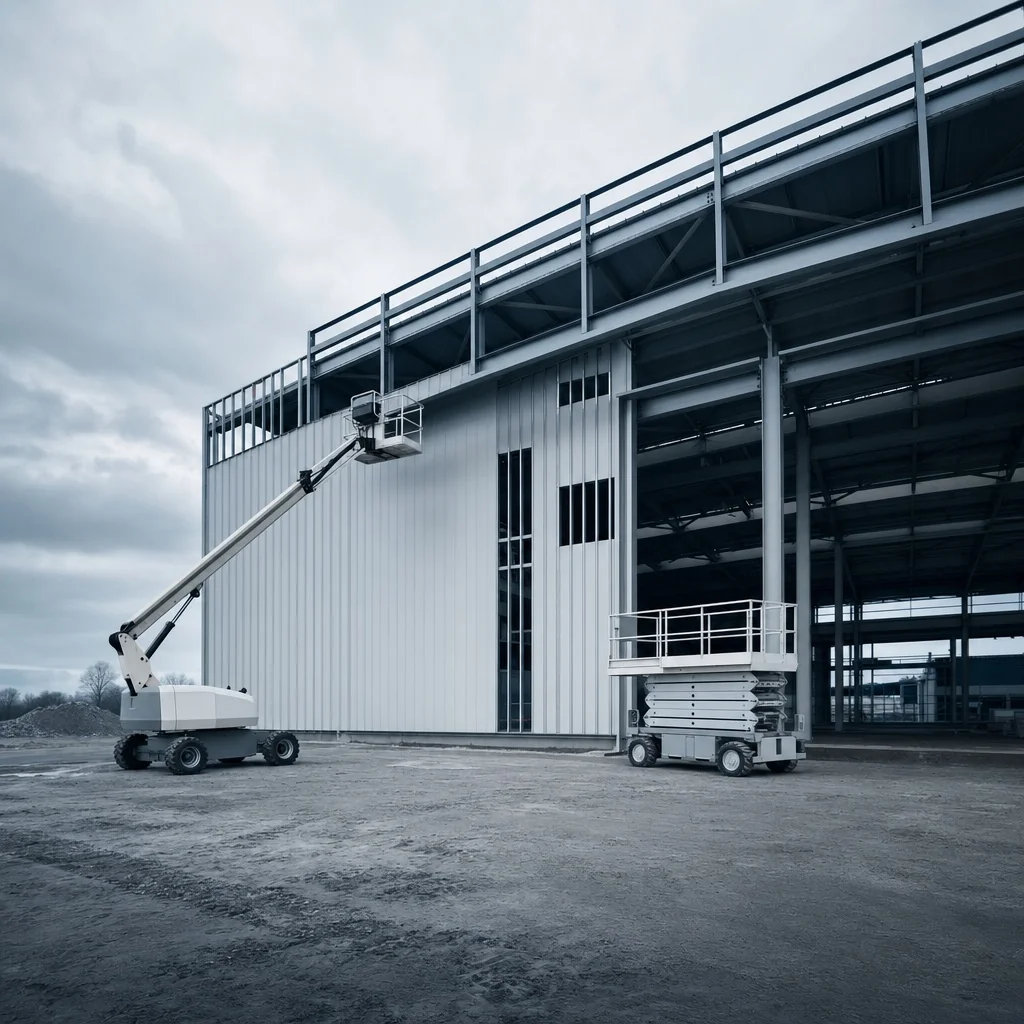
Clay-heavy soils and frequent freeze–thaw cycles can leave exterior work areas soft or uneven. That shifts decisions toward rough-terrain scissor lifts or boom lifts with 4WD and higher ground clearance. Indoors, slab-ready electrics remain the typical choice to protect finished floors and meet ventilation limits.
Measurements that matter before calling
- Can the machine sit below the task, or is up-and-over reach needed?
- Slab thickness and allowable point load along the travel path
- Doorway and freight elevator clearances from parking to work area
- Aisle width between racking or fixtures
- Work height versus platform height plus operator reach
Where to go next
- Interior slab work: see /electric-scissor-lift-rental/
- Exterior or soft ground: see /rough-terrain-scissor-lift-rental/
- Up-and-over access: see /articulating-boom-lift-rental/ and /telescopic-boom-lift-rental/
- Material staging or pick support: see /telehandler-rental/ and /forklift-rental/
Harrisburg projects benefit from planning around these constraints first, then matching equipment to the building type and season.
Editorial approach
Content is updated to reflect local building patterns, access paths common to distribution and institutional sites, and considerations from the regional climate. Equipment use always follows the selected unit’s instructions and site procedures.