Define the placement point first
Plan from the drop location back to the staging area: - Target height and setback from the edge at placement - Required forward reach with a partial or full extension boom - Approach path width, turning space, and surface type
Local construction often involves saturated edges near retaining features and utilities. That influences tire type, 4WD needs, and whether the site can support the machine’s axle loads.
Load chart thinking
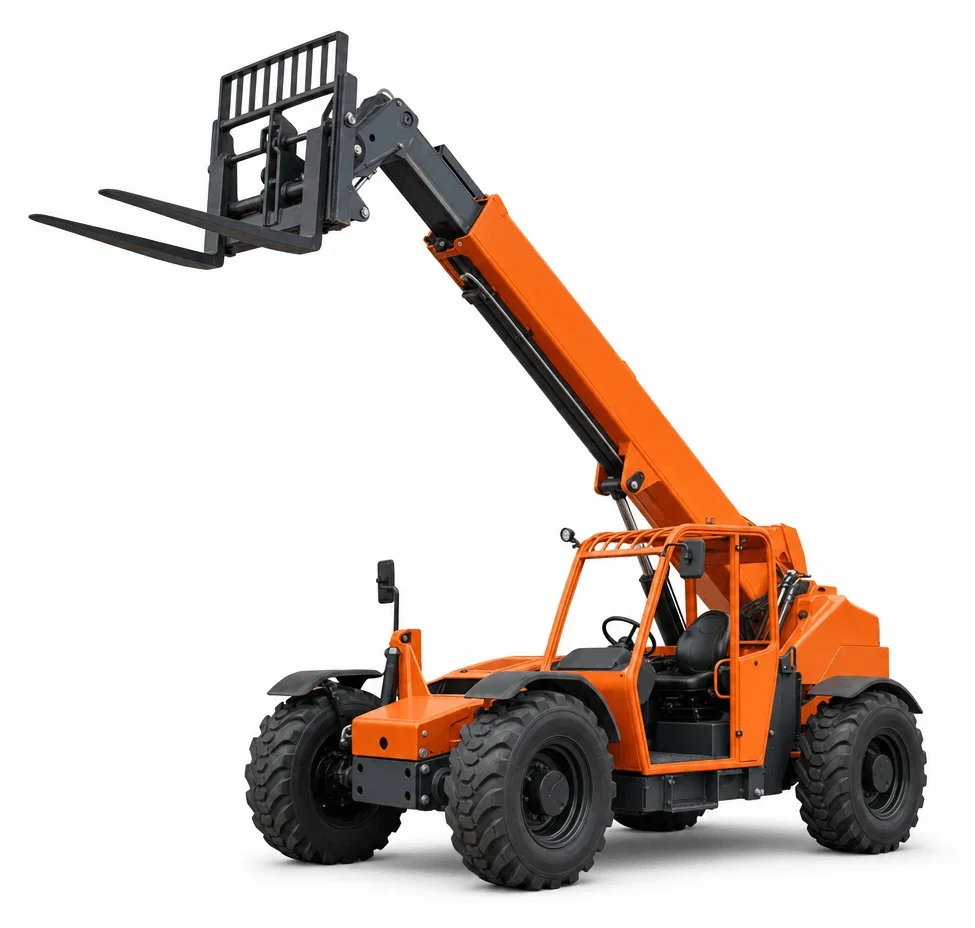
Telehandler capacity falls as boom angle increases and sections extend. Identify: - Maximum load weight at the needed radius - Pallet dimensions and fork spacing constraints - Visibility and lighting for precise placement at height
For high-bay distribution interiors, check aisle widths, slab ratings, and clearances under sprinklers or conveyors if the unit must stage partially indoors.
Harrisburg soil and season impacts
Clay-heavy soils and winter precipitation can create soft conditions in laydown yards. Plan for stabilized travel lanes and confirm ground bearing where the machine stops to set the load. Actual conditions, the selected unit’s instructions, and site procedures govern lifting and placement work.
Attachments and power context
Different fork and carriage configurations exist in the market, but final selection depends on the specific task and equipment guidance. Diesel power is common outdoors; low-emission options may be considered near enclosed docks with ventilation expectations.
When another machine is a better fit
- Personnel access only: see /articulating-boom-lift-rental/ or /telescopic-boom-lift-rental/
- Pure vertical stock picking or tight interiors: see /forklift-rental/ or /vertical-mast-lift-rental/
- Site support gear: see /storage-containers-rental/ or /generators-light-towers-rental/
Typical Harrisburg tasks
- Setting rooftop units from paved setbacks at industrial sites
- Placing masonry bundles beyond curbs or barriers
- Loading mezzanine levels where docks are congested or unavailable