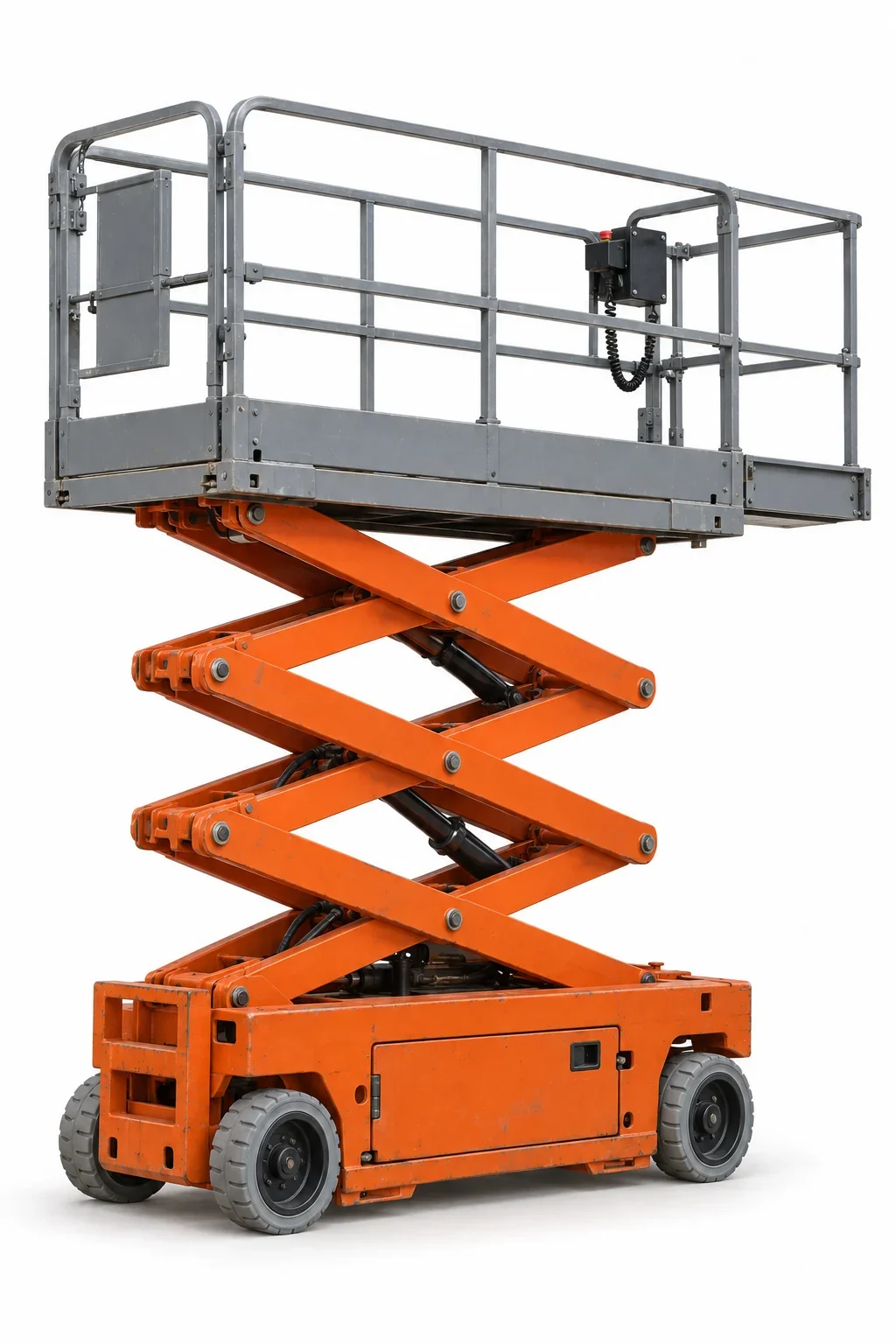
What makes a rough‑terrain scissor lift useful here
The regional climate produces seasonal saturation, so traction and stability matter along with vertical reach. Ground clearance helps over ruts and curbs. Wider platforms handle siding, glazing, and mechanical trades when multiple workers and materials share space.
Measurements and conditions to check
- Platform height and required capacity for people, tools, and materials
- Site slope and compaction level along the travel path
- Access points: curb cuts, ramps, and unfinished transitions
- Overhead conflicts such as canopies, lines, or structural steel
- Weather exposure for extended projects; storage and charging/refueling plans
Harrisburg site patterns that affect selection
Industrial sites on the metro fringe often blend compacted stone with patches of soft subgrade. After precipitation, certain areas may not support slab equipment. Rough‑terrain models with appropriate tires and clearance reduce ground contact risks compared with indoor units, but actual site conditions and the selected unit’s instructions govern any exterior work.
When a boom is the better match
If the work sits behind obstacles or needs horizontal reach along a facade, a boom lift may fit better. Compare options at /boom-lift-rental/ or see the broader mix at /aerial-lift-rental/. For interior slab tasks, head to /electric-scissor-lift-rental/.
Contact
Align the machine to soil conditions, approach routes, and task height. Harrisburg Scissor Lift Rentals, harrisburgscissorliftrental.com, (717) 937-1474.