Compare Aerial Equipment by the Path to the Work
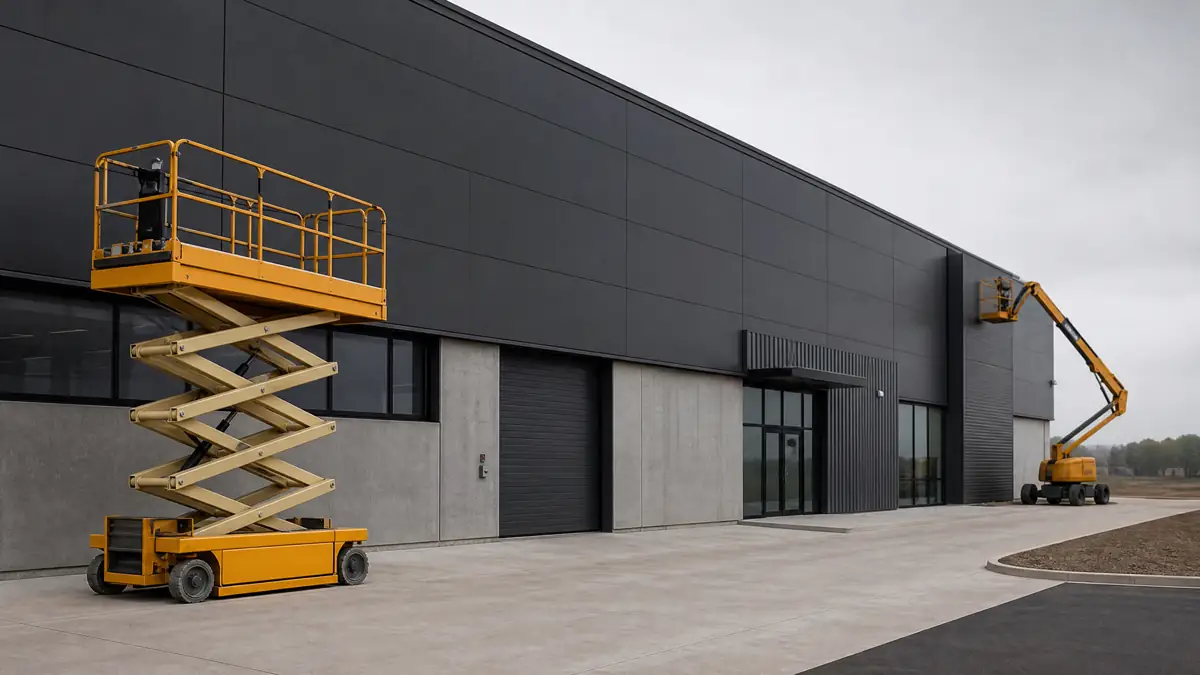
Scissor lifts are simple in concept—stable vertical access—but real jobsites introduce questions about height, floor conditions, width and reach. “Aerial lift” can describe several types of elevated-access equipment. The most useful question is not which machine is tallest, but how workers need to move from the base position to the task.
Harrisburg projects can involve distribution centers, warehouses, commercial construction, institutional properties and manufacturing sites. The operating environment can change substantially from one property to another, so the same lift is not automatically appropriate for every job.
Scissor Lifts: Primarily Vertical
Choose this category when a platform can be positioned beneath the work and workers mainly need elevation. Electric and rough-terrain versions serve very different environments.
Articulating Boom Lifts: Up and Over
Jointed boom sections allow the platform to move around many obstacles. This can be useful around machinery, walls, building projections and complicated exterior areas.
Telescopic Boom Lifts: Direct Outreach
Straight or telescopic booms are associated with long, comparatively direct reach in open work areas.
Four Questions to Answer
- How high is the work?
- How far horizontally is it from the nearest practical machine position?
- Is anything blocking a direct path?
- What surface will the machine operate on?
Aerial Lift FAQ
Is a scissor lift an aerial lift?
It is one common category of elevated-access equipment.
Which is better, a scissor lift or boom lift?
Neither is universally better. Scissor lifts favor vertical platform access; boom lifts provide horizontal positioning.
What is best for warehouse maintenance?
Electric scissor lifts are common on suitable warehouse floors, but obstacles and access restrictions can change the choice.
Do I need an exact model before calling?
No. Work height, surface, access and reach requirements are better starting points.
Aerial Lift Rental Information in Harrisburg
Call (717) 937-1474 to discuss the project location, approximate work height and operating conditions.