Define the job geometry first
- Can the generator or light tower sit below the task, or must it reach over stored product or vehicles?
- How far is the throw of light needed across a loading apron or staging area?
- Will cables cross active forklift routes or pedestrian paths inside a facility?
Clear sight lines matter in high‑bay aisles common in local distribution buildings. Narrow passages limit mast height when moving a light tower indoors or under canopy. Courtyard work around large public buildings creates echo and heat buildup; that affects engine choice and ventilation planning.
Surface and access in Central PA conditions
Clay‑heavy soils soften during freeze‑thaw and after rain. On unpaved staging, prioritize units with wider stance and rough‑terrain undercarriage. For slab floors, low‑profile, non‑marking wheel units avoid scuffing and fit under dock doors.
- Access width: measure dock doors, corridor turns, and gate clearances.
- Ground bearing: saturated areas may not support point loads from outriggers.
- Grade: verify approach slopes to ramps and service alleys.
Power sizing and distribution
Warehouses here run extended shifts. Long runtimes favor larger fuel tanks or hybrid packages. For indoor or semi‑enclosed maintenance, look at electric distribution from a central source and keep exhaust outside the occupied zone. Identify:
- Peak and continuous kW draw of tools and temporary HVAC.
- Voltage and phase needs across different trades.
- Distance from source to loads; longer runs change cable size and voltage drop planning.
Lighting selection for mixed sites
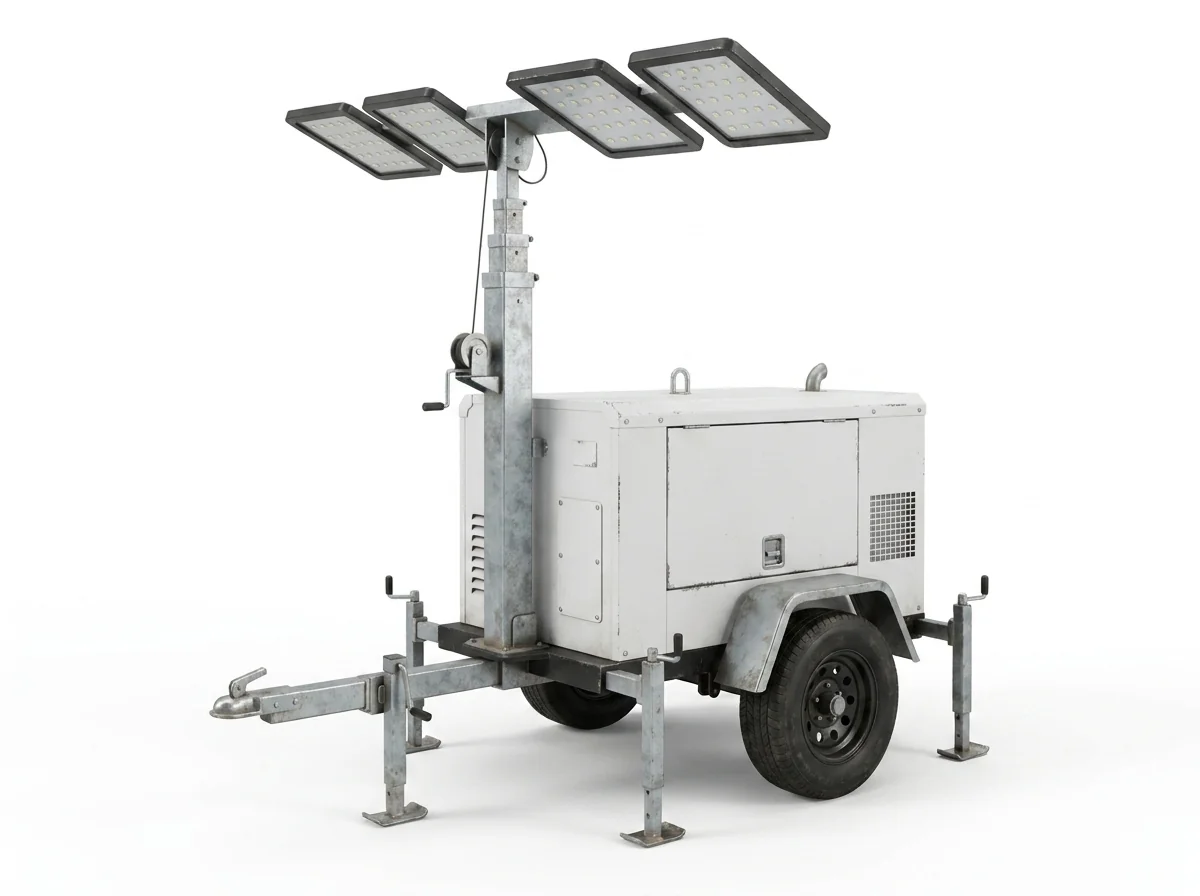
Winter precipitation and summer humidity require enclosures and connectors rated for moisture. For broad logistics aprons, higher‑mast units with adjustable heads reduce shadowing on trailer lines. In tight capitol‑area courtyards, glare control and lower mast heights reduce spill light onto adjacent walkways.
- Target lux on work plane vs. perimeter spill limits.
- Mast height vs. obstructions like canopies and overhead utilities.
- Noise sensitivity near offices or occupied spaces.
Related access equipment
If light placement or cabling needs elevated access, compare options at:
- /electric-scissor-lift-rental/
- /rough-terrain-scissor-lift-rental/
- /vertical-mast-lift-rental/
- /boom-lift-rental/
When the location shapes the choice
- High‑bay picking zones: favor quiet power and compact fixtures to avoid blocking lift traffic.
- Outdoor laydown on saturated ground: rough‑terrain light towers with wider tires and stabilizers.
- Institutional maintenance: plan for limited delivery windows and low noise profiles during business hours.